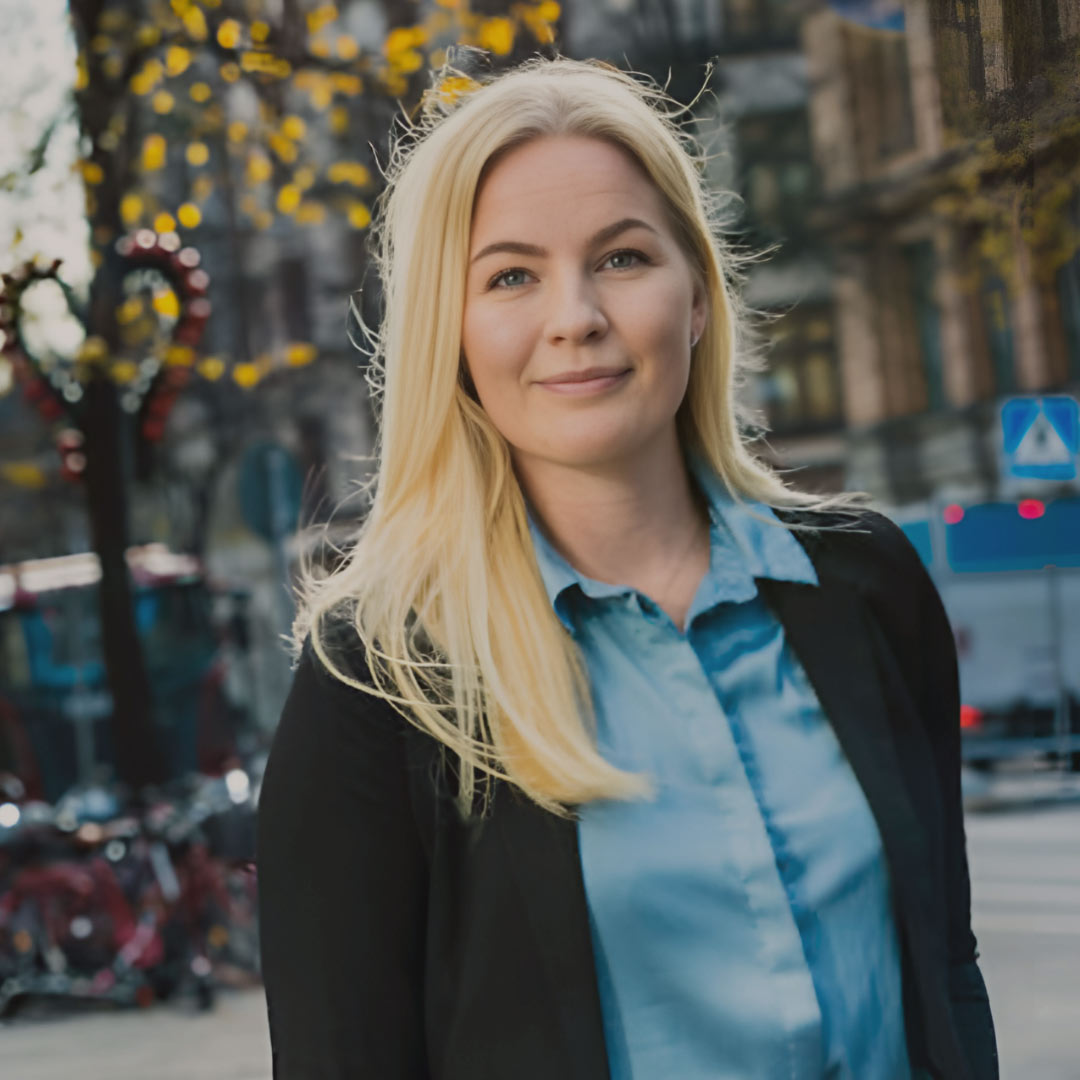
 Johanna Englundh, Editor at Morningstar
1. Don't time the market
Trying to predict the market's short-term movements can be extremely difficult and risky, and not least time-consuming. Even experienced investors have difficulty precisely timing the top and bottom. Instead, several studies from, for example, Morningstar show that it often leads to missing the market's recovery and choosing the wrong products at the wrong times, thereby missing out on returns.
Instead of timing the market, it is better to invest a fixed amount at regular times, regardless of market movements. This way, you buy more shares when prices are low and fewer when they are high, which evens out the cost over time.
2. Understand the role of the krona in your fund's return, but don't invest based on krona movements
For funds that invest abroad, such as global funds, currency risk is an important factor to understand. If you invest in a fund that contains assets in foreign currency, exchange rate movements can affect your return positively or negatively. If the krona weakens, foreign assets can give a higher return when converted to Swedish kronor, and vice versa.
In other words, with the weakening of the krona in recent years, it is not surprising that your Swedish equity fund has performed worse than your global equity fund, and exchange rates explain part of this. But that doesn't mean you should sell all Swedish funds and only invest abroad. Instead, consider whether you believe in Swedish companies in the long term, and whether it is possible that the krona may strengthen in the future.
It is better to focus on the fund's long-term potential return based on its underlying assets, rather than trying to time currency changes. Diversification between different currencies can also be a way to reduce the risk of large currency losses.
3. Beware of expensive fund fees
Despite the fact that fund fees in Sweden are low compared to many countries in Europe, there are some funds that stand out with high fees. The fund's fee is one of several important parameters to consider when choosing a fund and a key factor behind a fund's success. But the absolutely cheapest fund does not necessarily have to be the one you should choose. Similarly, an expensive fund does not have to mean that the manager works harder or more than any other manager, in order to ultimately deliver a higher return.
Among Swedish-registered funds, the average annual fee for index funds is 0.34% and 0.96% for actively managed funds. If you have a fund that charges a higher fee than this, I think it's high time you checked whether you also received the return you expected, and whether the fund has actually beaten its benchmark over time.
4. Diversification can be done in a variety of ways
Diversification is about spreading investments across different asset classes (such as stocks, bonds, commodities, real estate), geographical regions and sectors. It reduces risk by not being overly exposed to a single area that could be negatively affected by a market crash or other negative events.
Diversification can also be done by choosing different types of funds (for example, equity funds, balanced funds and fixed income funds), or by including alternative investments such as commodities or real estate. But you also get diversification by investing in different currencies, such as Swedish kronor in a Swedish fund or the exposure to dollars that you get through a US fund.
5. Enjoy tax-free ISK
The big news for investors in 2025 is not only that the tax on ISK will fall from the record high level in 2024, but now a tax-free level is also being introduced. All capital under 150,000 kronor per person in an ISK will be tax-free after the new year, a level that will then double the following year. This means that the investment account will be even more advantageous for investors. It is simple to have an ISK during tax declaration times, but it is also good for those who want to switch one fund to another, or someone who wants to reorganize their share portfolio without triggering capital gains tax.
For those who have investments within the framework of the tax-free level, the choice should therefore be easy, if there are no other aspects that come into play when choosing an account type. For those who are saving for their children, for example, there are several pitfalls that are important to keep an eye on when choosing ISK or Capital Insurance. But for the majority, ISK will be the obvious choice, regardless of whether you end up above the threshold for the tax-free level or not.

