Karin Wehlin, interim CEO at Diagonal Bio, shares her extensive experience and talks about the company's progress, including commercialization of its CE-marked product and plans for 2024. She highlights challenges, emphasizes the company's attractive business model and market position.
1. Hi Karin, can you tell us a little about yourself and your role in Diagonal Bio?
Since November 23, I have been interim CEO of Diagonal Bio and was elected as a member of Diagonal Bio's board of directors in May 2023. I have approximately 15 years of experience as CEO in early Life Science companies, including 10 years as CEO of BoMill. At BoMill, I built up a marketing and sales organization, contracted distributors in Europe, the US and Canada, and started up production of equipment/machines in Sweden. During my time as CEO, we went from 0 machines sold to 40 which are now in Europe, Canada and the US.
I am also the founder of EQL Pharma where I was the working chairman of the board for 10 years, which included 2 years in a listed environment (listed in 2013). EQL Pharma currently has a market cap of 1,000 MSEK. I also have experience from Corporate Finance.

2. How will your experience and background contribute to the development of Diagonal Bio?
My strong background will be useful in my new role as interim CEO at Diagonal Bio. Below are areas where I will primarily be able to contribute to continuing to develop Diagonal Bio:
- Transformation of a company that has developed an analytical instrument for analyzing viruses and bacteria, among other things, in record time. Now the company will be transformed into a company that will commercialize its product.
- I have solid experience in various forms of capital injections, which also comes in handy here to secure the financing of the company.
3. At the beginning of the year, you set milestones for 2023, and these milestones have all been met. What goals do you have set for 2024?
Strong focus on commercialization of LAMPlifyTM to broaden segments within the less regulated market. This also includes introduction to the "for Research only" segment, where we have an ambition to market and sell to, among others, CRO operations. It is also important that we connect with KOLs around Europe primarily and the US secondarily.
4. In July you CE marked LAMPlifyTM. How has the interest been from the market? What market share can you capture and how will you go about achieving this?
It has been primarily the veterinary market that has shown interest in LAMPlifyTM, and this is also due to our choice to focus on this segment. With brand new technology, there is a lot of work to do to get the information out about our product, which has been done during the second half of 2023.
In the veterinary market, we are focused on a niche market with premium customers. We will broaden the customer base to volume markets that can also be more geographically spread.
5. Can you point to any potential obstacles or competition that could affect your success?
During the pandemic, many laboratories invested in PCR technology. As we now approach the CRO market, it may happen that investment opportunities in new technology are limited and that we are seen as a "corona company," which we are not. It is important to point out that in cases where rapid results are required for samples of, for example, viruses or bacteria, LAMPlifyTM is a significantly better alternative both in terms of time and cost.
6. PanviralTM has been somewhat overshadowed by LAMPlifyTM during the year. What can you say about the development of Panviral and when is Panviral also expected to be CE approved?
In order to start selling PanviralTM, which is aimed at Human Diagnostics, we must first get the instrument IVDR certified. This is a process that includes, among other things, a certified quality system, technical documentation and documented clinical tests. Such a process is expected to take just over two years. Our ambition is to start such a process as soon as we have the resources, such as personnel and finances.
7. Regarding the agreement with OIM. Do they produce both instruments and consumables for you? Do you receive a royalty of 18% for both parts? How do you see that collaboration developing even further in the long term?
OIM only produces our instruments, no consumables. An 18% royalty is paid to Diagonal Bio if OIM sells a non-patentable part of the technology. The royalty agreement is a non-exclusive agreement.
8. Finally, why should one consider investing in Diagonal Bio?
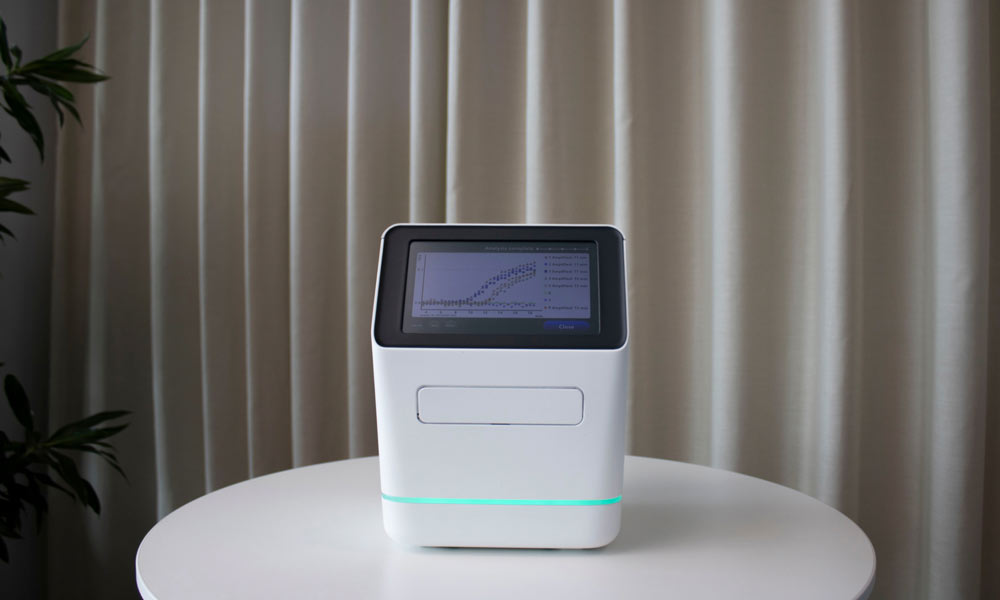
Diagonal Bio has a robust patent that protects our innovation until 2041. We stand behind a unique analytical instrument that responds to the market's need for fast and reliable results in virus, bacteria and pathogen analysis. Our business model is attractive, with the main revenue generated from consumables that are both unique and design-protected for our instruments.
Diagonal Bio has a competent organization and we have successfully established a strong and competent network of specialists. There are inquiries from the market from various players. With a relatively limited organization, we focus on a few solutions that the market demands. We strive to do excellent work within these segments in order to then expand geographically with these offerings to the market.
We will continue to work focused and passionately to reach as broad a market as possible.
We thank Karin Wehlin for the interview and look forward to continuing to follow
Diagonal Bio's journey.
Disclaimer:
This is an interview that has been done on behalf of the company. Impala Nordic or people behind Impala Nordic owns no shares in the company at the time of the interview. Impala Nordic is a lender to the company in connection with the company's bridge financing announced on August 22, 2023.

